

Process & Methodology

Updated: Aug 31, 2021
Initial Stages
After establishing primary research questions, it became evident that written research alone could not appropriately feed this Practice as Research project. What better way to address issues relevant to emerging dance artists and educators than to build a resource specifically targeting these individuals? With roots in dance education research, good interview practice, and awareness of virtual resources, the idea for Fostering Creativity and Building Community: a dance education podcast was conceived.
Podcasts have been rapidly growing in popularity. In America alone, podcasts reached 116 million monthly listeners as of March 2021. Edison Research’s Infinite Dial 2021 report tells us that “half of all podcast listeners are aged 12 to 34, with listeners 35+ making up the other half” (Kaufer, 2021). There is a vast range of podcast topics to choose from, ensuring something is available for anybody who would like to listen.
Dr. Katie Linder of Oregon State University runs a podcast series titled Research in Action. Her work is not simply the podcast itself – each episode includes a written transcript and instructional resources that can assist educators when using podcasts as educational resources. The podcast series was developed for higher education, aiming to “increase research literacy and to support a community for researchers in higher education” (Salmons, 2018). The Oregon State University Research in Action podcast team has set up resources for aspiring podcasters, prompting those podcasters to think about consistency, analytics, time frames, and the specifics of the podcast series (Oregon State University RIA Team, n.d.).
In addition to using Research in Action’s resources, I listened to relevant dance podcasts such as Movement Lab’s Material for the Brain, Downtime with Lou Cope, and Royal Academy of Dance’s Why Dance Matters. I began my journey into podcasting with the hope that I could create an easy, accessible, and advantageous resource for young dance practitioners to utilize.
The Podcast Process
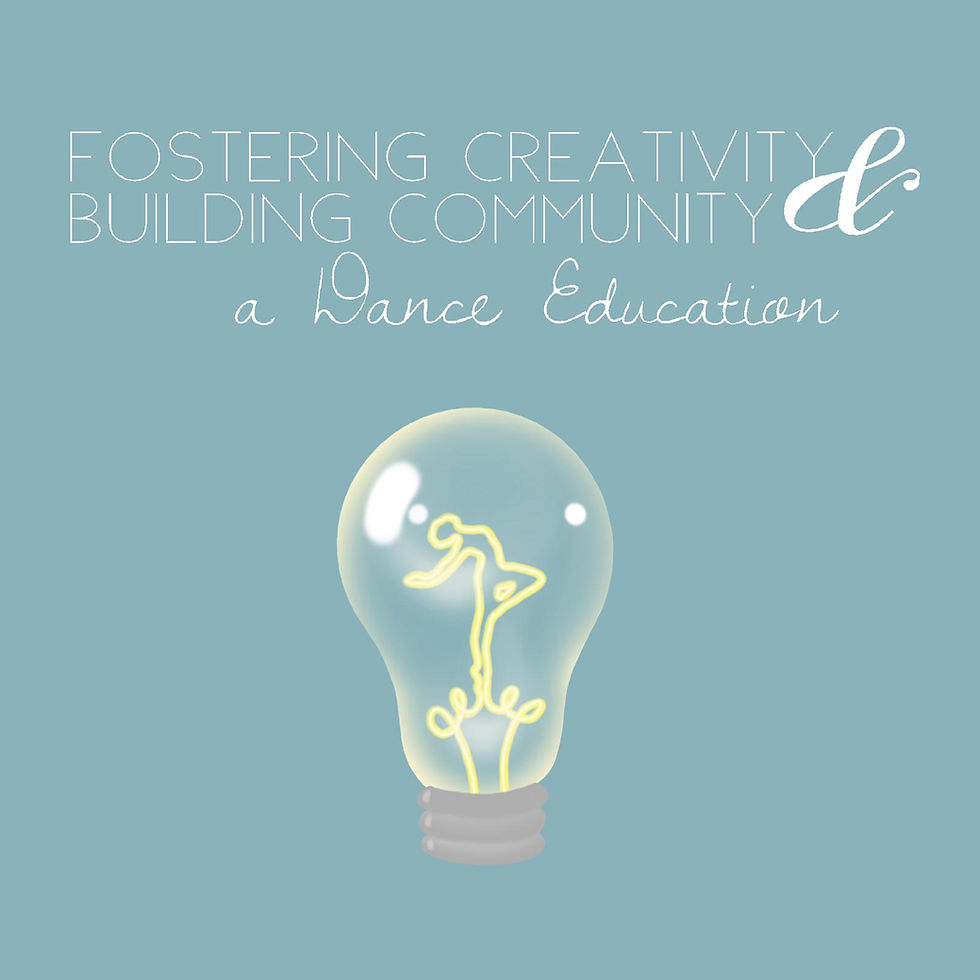
Much work was completed behind-the-scenes to set up my podcast. Firstly, I confirmed the series name and commissioned an artist to create a cover image. I researched podcast hosting websites and settled on RedCircle, which would provide valuable analytics and automatically distribute to platforms such as Spotify and Apple Podcasts after connection of a relevant RSS feed. Additionally, I took on extensive website re-design to make my professional website a viable place to house the podcast series and accompanying Practice as Research blog posts. The Practice as Research tab includes a feature for site visitors to comment on posts and interact with material.
Once the logistics of publishing a podcast were sorted, I turned my attention to successful hosting. Understanding good interview practice is key for conducting effective sessions with podcast guests, encouraging listeners to develop “as complete a picture as possible from the words and experiences of the participant” (deMarrais & Lapan, 2004, p. 52). Through use of open-ended language during qualitative interviews, a good podcast host works to create “shared meanings” with guests (deMarrais & Lapan, 2004, p. 64). This ensures that, regardless of differing beliefs between host, guest, and listener, we can understand each point of view in relation to our own values. The following are identified as barriers to success in qualitative interview practice:

(deMarrais & Lapan, 2004, p. 67)
Before beginning podcast sessions, I recruited one of my peers, Rebecca Burgin, to interview me. Rebecca was already aware of the project’s aims, objectives, and outcomes prior to our test interview. To support her as a stand-in host, I provided her with an informational session about good interview practice. She chose from the same topics I would utilize during my interview sessions. After the interview, we engaged in open feedback and sharing session to discuss our roles as “host” and “guest,” explore how methodology made the other feel, and suggest realistic improvements to my interview design.
Participants, referred to as podcast “guests,” were sourced and selected, with the intention for each episode to be about 20 minutes in length. In line with good interview practice, I did not interrupt or stop guests as they spoke in their interviews, leading to some interviews being longer than others. Each session followed the same general framework, but conversation veered in varying directions depending on the guests’ experiences and preferences.

Outcomes
While the tangible and expected outcome of this Practice as Research project includes podcast episodes themselves, the impact of episode content on my ideas about creative practice proved to be an unexpected outcome. Individual interviews discussed varying topics, but each guest answered the same two central questions in their respective episodes: “how do you define creativity” and “what advice would you give emerging dance educators”?
In response to the first question, guests gave distinctive descriptions for “creativity.” Their descriptor words were chosen carefully, and despite later identifying commonalities in perceptions of creative practice, creativity seemed to be a specific and personal word for each. Simultaneously, all acknowledged that defining creativity was a difficult thing for them to do, as evidenced by statements such as Lindsay’s “I don’t know if that was even a distinguishable answer for your question,” and Jenny’s “Wow, I hope that helps. That’s a good question – I should look that up in the dictionary!”
When formulating the question regarding advice for emerging educators, I initially expected podcast guests might all give some version of the same response – perhaps something young educators could do to streamline success. Although this was almost certainly wishful thinking on my part, I found the reality of their answers to be profound. Each guest provided advice that was most pertinent to their brands, experiences, and values as educators.
For example, Maria’s advice, including “believe in your most authentic self. Create a strong vision for yourself,” rings true with her vast accomplishments (such as off-Broadway shows, international tours, building her own theatre). In comparison, Anna’s advice regarding “if you have a job that you love, that’s the best job in the world” reflects on the fact that she is the youngest of my podcast guests; while her accomplishments are no less impressive than Maria’s, she works in a very different sector of the dance world and is still building her career. Upon reflection, this unexpected outcome further emphasizes the importance of identifying personal preferences within practice, and not just for the sake of articulating creativity.
Perhaps the most unexpected and exciting outcome is that creating this podcast has helped me to realize what virtual resources can do to inspire, encourage, and assist aspiring educators like myself. Through podcast format, we can listen to the voices of experienced professionals as they provide context for many of the same ideas that those incoming to the industry are just starting to explore and form opinions on. I’ve found that teachers want to talk about their practice, they crave sharing their ideas. Although they are in front of students as part of their profession, they rarely get the chance to explain why they do things a particular way, or to talk about the more abstract ideas behind their motivation to teach. Realistically, there is also a need for this type of resource in the podcast market. Because of my position as a young dance practitioner, I am able to provide insight into what others like myself need or want to talk about, and then through connections in my professional life, via social media, and at the suggestion of others in my community, I can reach out to the kind of practitioners who are willing to answer these key questions.
Are you an aspiring educator who would benefit from a resource like this? Have you given any of my podcast episodes a listen, and did they resonate with you? Leave a comment and let me know what you think!
References
DeMarrais, K. (2004). Qualitative Interview Studies: Learning Through Experience. In S. D. Lapan (Ed.), Foundations for Research: Methods of Inquiry in Education and the Social Sciences. doi:10.4324/9781410609373
Kaufer, K. (2021, May 12). Who Listens To Podcasts (And How Can You Reach Them)? Retrieved from https://www.forbes.com/sites/forbesagencycouncil/2021/05/12/who-listens-to-podcasts-and-how-can-you-reach-them/
Oregon State University RIA Team. (n.d.). How to Create a Podcast: Tips from the "Research in Action" podcast team [Web log post]. Retrieved from https://ecampus.oregonstate.edu/research/podcast/how-to-create-a-podcast/
Salmons, J. (2018). Research and Academic Podcasting. Retrieved from https://www-methodspace-com.salford.idm.oclc.org/research-and-academic-podcasting/
Word count - 1,244 words
Comments